Sunday, January 14, 2018

Saturday, January 13, 2018
Thomas Kakinuma

The story of ceramics in British Columbia art is a furtive history that includes artists who received their training in the medium (Glenn Lewis was a student of Bernard Leach), who shared their lessons with others (Gathie Falk was a protégé of Lewis), only to move in multiple artistic directions. Some ceramicists, like Wayne Ngan and Charmian Johnson, held the course and continue to produce intelligent bowls and vases, while others, like Japanese-born Thomas Kakinuma (1908-1982), are returned to us by thoughtful curators.

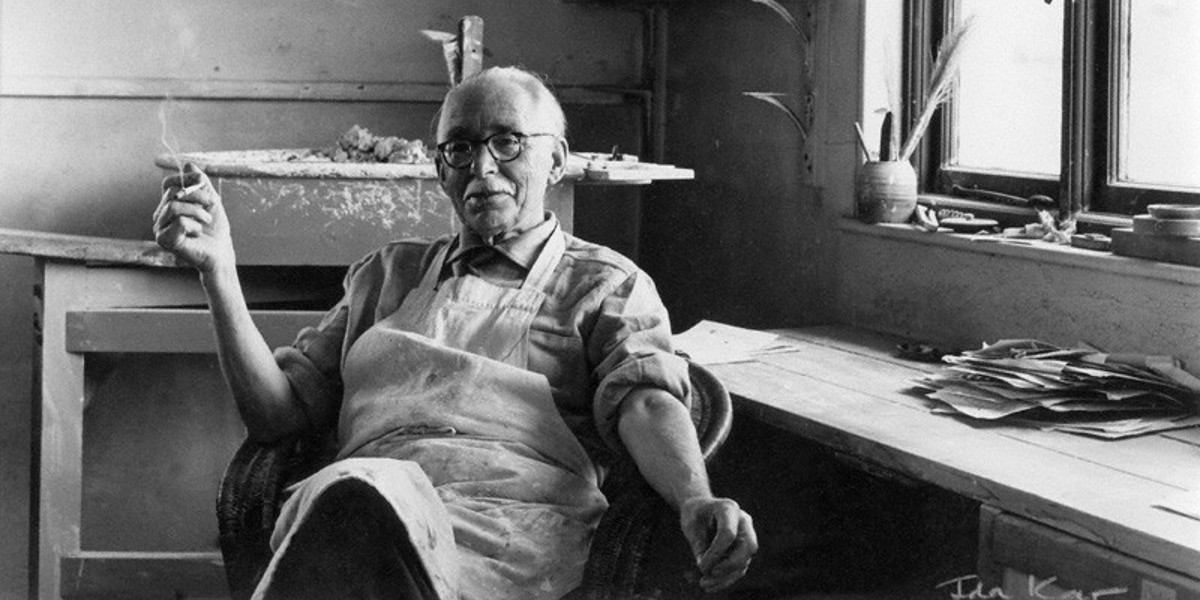


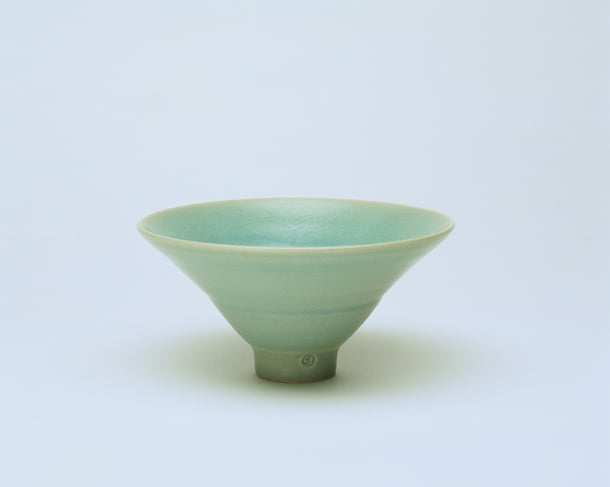

The poignancy of Kakinuma’s
small figurative sculptures, which he was known for amongst collectors keen to
accent their stark mid-century furniture, appears more so when viewed in
relation to the artist’s own story. At 29, Kakinuma immigrated to Vancouver en
route to Paris, where he hoped to study art. But World War II intervened.
After studying drawing and painting in Toronto, New York, then Toronto again to
study ceramics, Kakinuma returned to Vancouver, where he taught at UBC’sPottery Hut.


It was in 1950s Vancouver that
Kakinuma developed his reputation as a maker of animals. “The birds are quick
to produce and easy to sell,” he said of his figurines, “but I would really
like to work on a one-man show, rather than making small items for stores.” Indeed,
for Kakinuma the goal was to make large abstract sculpture. Although he realized
his ambitions through participation in important exhibitions, and awards that
allowed him to study in Japan and Mexico, it has taken this long for us to hear
from him again.

Friday, January 12, 2018
"On Writing"

A few months ago I was invited by Bush Gallery to contribute to a guest edited issue of C Magazine. The magazine has a number of regular features, and I was asked to write something "experimental" for its "On Writing" column. Honoured, I said yes.
The magazine arrived a couple days ago, and I have been flipping through it.
Two of the more active members of Bush Gallery -- Peter Morin and Tania Willard -- took an interesting approach to another of the magazine's regular sections -- "Book Reviews" -- to apply the Bush Gallery concept of Storymancy to texts by authors such as Sherman Alexie, Shirley Bear and Eden Robinson. A nice piece of writing!
Thursday, January 11, 2018
A small room inside a bay window. A single bed, a table and chair, and a sink. I could manage something larger, with more conveniences, but I could never match the view.
Last night I took By the Waters of Manhattan: Selected Verse (1962) by Charles Reznikoff to bed with me and read a couple of short pieces about a work crew boarding an over-crowded ferry and a young worker who gets her hair caught in the gears of a factory sewing machine before drifting off.
When I awoke I turned on the radio and listened to our mayor, Gregor Robertson, field questions on CKNW's "Jon McComb Show" about his decision to not seek a fourth term.
McComb: "Do you think that the housing crises has, in effect, left you unelectable as mayor?"
Robertson: "Oh no, not at all. Quite the opposite. I feel it's kinda going against my competitive nature to not run again. I've been elected three times with those consistent priorities of focusing on affordable housing and rental housing in particular. Those of us who are lucky enough to own a place and bought into the market years ago, we're doing fine, and we've had a huge windfall from the increase and made a lot of wealth.
McComb (sarcastically): Well good for you!
Robertson: Yeah, and that is something to be thankful for, but for half of the city here in Vancouver -- rent -- they don't own a place, and that's gotten way tougher. The values of real estate end up impacting rents, so we're seeing the pressure on half the city having trouble with affordability and that's where city hall has to focus on the affordable side of the spectrum, and rental housing, and making sure-- You know, I think that's been a top priority for me, and I expect and hope that the next mayor of Vancouver continues to do everything that city hall can do on housing and transit -- getting the Broadway subway built is still something I am hopeful I can deliver with mayors across the region in the year before this term is up -- so I've still got this year to deliver a whole bunch of the big commitments that I've been committed to.
McComb: But your heart is not in it though.
Robertson: Yeah, that's where I ended up over the holidays with my family and friends for a lot more time than I've had with them for many years and it really hammered home for me personally that I am ready for change.
Perplexed, I return to the imagistic poems of Reznikoff, and this short piece in particular, "Building Boom", which brings to mind the pictures of Ian Wallace, Jeff Wall, Roy Arden and Stan Douglas, not to mention Westbank's "Fight for Beauty" campaign:
The avenue of willows leads nowhere:
it begins at the blank wall of the new apartment house
and ends in the middle of a lot for sale.
Paper and cans are thrown about the trees.
The disorder does not touch the flower branches;
but the trees have become small among the new house,
and will be cut down --
their beauty cannot save them.
Wednesday, January 10, 2018
Tuesday, January 9, 2018
Glenn Gould's Obsession with Petula Clark (1967)
As Canadians we are told that Glenn Gould is a cultural icon. For years I had no problem with this. Then a couple days ago I saw a posting on Gould's December 11, 1967 radio documentary The Search for Petula Clark and thought, What a drip!
Of "today's pop music," Gould describes it as "relentlessly diatonic." I laughed when I heard this. But then I thought about it, and it occurred to me that pop music at the time of Gould's writing was in fact more pentatonic than diatonic.
As an example of "today's pop music," Gould gives us the Beatles' "Strawberry Fields" (1967), which he likens to "a mountain wedding between Claudio Monteverdi and a jug band." Again, I laughed, but then I thought about it, and it occurred to me that "Strawberry Fields" is in fact closer to collage (montage?) than the 12-bar blues-based songs that dominated pop music at that time.
On that note, isn't Gould's subsequent The Idea of North (1967) documentary a collage, and as a collage, doesn't "Strawberry Fields" belong as much to its producer, George Martin, who assembled it from fragments (and scored it) than the band it is attributed to? And if that's the case, wouldn't that make Martin the minister who married Monteverdi and that jug band -- in Appalachia?
Or maybe I have this wrong? Maybe Gould has his tongue in his cheek and is putting us on. Or maybe he has a crush on "Pet" Clark and this is his creepy way of saying so. Or maybe, like that other media maven Marshall McLuhan, he is on the autism spectrum and all people saw was his genius.
Monday, January 8, 2018
Orthodox Christmas

Yesterday was Christmas for Orthodox Christians who follow the Gregorian calendar -- or for those who love Christmas so much they need it twice a year.
As a child I was one of those two-Christmases-a year-people because my father's mother is Russian.
Two Orthodox Christmases ago I attended a dinner at a Ukranian community hall in Surrey. So nice to hear the songs again, experience the thunder and lightning of those dances. Plus the designs and their relationship to those dances.
Hopak! (Or Gopak, as the Cossacks say.)
Subscribe to:
Posts (Atom)